3 Scoops – A Hands-On Embroidery Review
When I first opened the 3 Scoops embroidery file, I admit I smiled. There is something immediately cheerful about this design. It is a machine embroidery design that leans into a playful dessert theme without feeling childish or overly cutesy. The composition feels balanced, the subject matter is instantly recognizable, and the overall mood is bright and nostalgic. For anyone who sews for a small shop, creates personalized gift items, or builds handmade product lines around food and dessert motifs, this embroidery project has real potential.
Before I get into the stitching details, I want to be clear about one thing. This review comes from actual use. I tested 3 Scoops on a cotton tote bag, a toddler sweatshirt, and a linen kitchen towel. I wanted to see how it behaved across different fabrics and how the final finished product looked in each case. The following is what I learned.
First Taste: What 3 Scoops Brings to the Hoop
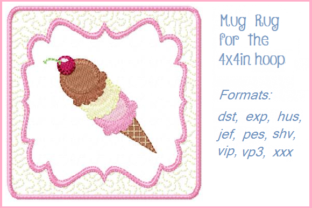
The design features three stacked scoops of ice cream, and the first thing that stood out to me was the silhouette. The shapes are rounded and generous, which gives the design a soft, friendly feel. The scoops are not perfectly uniform, and that slight irregularity adds a handmade quality that customers respond well to. It does not look like a generic clip-art ice cream cone. It looks like something drawn with care and then digitized for stitching.
The embroidery file comes in multiple formats, which is standard for a design meant to work across different machines. I tested it in both a 4x4 hoop and a 5x7 hoop, and the design scaled reasonably well. The smaller hoop version kept the main shapes readable, though some of the finer detailing around the top scoop became tighter. If you are planning to stitch this on a baby embroidery item or a cap, you will want to check the hoop size against the design dimensions before committing.
In terms of visual personality, 3 Scoops lands somewhere between a retro ice cream parlor logo and a modern craft aesthetic. It would work well on a sweatshirt embroidery piece for a boutique brand, or as a tote bag design for a farmers market stall. The Dessert category is a natural fit, but the design is versatile enough to cross into summer-themed holiday embroidery or even birthday personalized gift projects.
Testing 3 Scoops on a Real Project
I decided to prepare a custom embroidered patch first. This is a common request from Etsy seller clients who want to add a design to aprons, caps, or tote bags without committing to direct embroidery on the garment. I hooped a piece of medium-weight twill, used a tear-away stabilizer, and ran the design through my machine.
The satin stitch outlines came through cleanly. The fill stitch areas for each scoop were dense enough to give good coverage without puckering the fabric. I used a pale pink for the bottom scoop, a mint green for the middle, and a soft vanilla for the top. The thread colors worked well together, and the contrast between the scoops was clear even from a distance. The design includes a small cherry detail on top, and that tiny element stitched out without any issues. The running stitch accents added a nice touch of movement without overcrowding the design.
After the patch, I moved to a sweatshirt embroidery test. Sweatshirt fleece can be tricky because of the nap and stretch. I used a cut-away stabilizer and a light topping sheet to keep the stitches from sinking into the fabric. The stitch density felt appropriate for this application. The design did not distort, and the scoops held their shape. I would feel confident offering this as a custom apparel option for a client's small shop.
I also tested 3 Scoops on a linen kitchen towel. Linen is a looser weave, and I was concerned about the fill stitch areas pulling the fabric. I used a medium-weight cut-away stabilizer and reduced the top tension slightly. The design stitched cleanly, and the final result looked like a premium handmade product that would sell well at a craft fair or in an Etsy seller shop.
Where 3 Scoops Shines Brightest
Based on my testing, this design is most effective on items where the dessert theme feels natural and where the design can be seen clearly. Here are some of the best uses I identified:
- Tote bag design – The rounded shapes work well on a canvas or cotton tote. The design sits nicely in the center of the bag or slightly off-center near the top edge.
- Sweatshirt embroidery – Especially on solid colors. A light cream or pale pink sweatshirt lets the scoops pop without fighting the background.
- Baby embroidery – The design is gentle enough for a baby onesie or romper. The applique design potential is also worth exploring if you prefer that technique over dense fill stitching.
- Embroidered patch – As I mentioned, this works well as a patch. It is easy to sell patches as standalone digital embroidery file products or as sewn-on additions to other items.
- Holiday embroidery – Summer birthdays, ice cream socials, and even Fourth of July projects can use a dessert motif like this. It is not tied to a specific holiday, which makes it more versatile for year-round use.
- Pillow cover – A small throw pillow with this design centered on the front panel would be a fun handmade product for a children's room or a kitchen nook.
- Apron – An apron with 3 Scoops on the front pocket or chest area would be a natural fit for a dessert shop or home baker.
In each of these applications, the design feels appropriate and adds a sense of playfulness that customers notice. For a craft business, this is the kind of design assets that can be used across multiple product lines without feeling repetitive.
Where to Use Caution with This Design
No design is perfect for every situation, and 3 Scoops has a few areas where I recommend careful planning.
Small hoop sizes. If you are working with a 4x4 hoop, the design will fit, but the details around the cherry and the top scoop become tighter. Test the embroidery file on a scrap piece first to see if the smaller scale still reads clearly. For very small items like baby embroidery on a newborn onesie, the design might feel a bit large. Consider scaling it down slightly, but watch the stitch density.
Dark fabric. The scoops are light and pastel by nature. On a dark fabric like black or navy, the design will require a white or light underlay to keep the colors vibrant. If you are stitching on a dark sweatshirt, plan your thread colors accordingly. A dark background can wash out the lighter shades.
Textured fabric. Thick knits, heavy fleece, or fabrics with a lot of texture can cause the fill stitch areas to look uneven. I recommend a strong cut-away stabilizer and a topping sheet for any fabric with a nap or texture.
Curved surfaces like caps. The design is wide and rounded. On a cap, it may not fit the curved front panel well without distortion. If you plan to use it on hats, test the placement and consider using a smaller hoop to reduce the width.
Dense stitch areas. The stitch density is not extreme, but the fill areas are solid. On very thin or stretchy fabric, the design can cause puckering. Always stabilize well and test before committing to a commercial embroidery run.
The Visual Payoff and What It Means for Your Shop
One of the reasons I wanted to review 3 Scoops is because dessert-themed embroidery designs are consistently popular with Etsy seller audiences and small shop product buyers. They evoke comfort, nostalgia, and a sense of treat. When you stitch this design onto a finished product, the visual appeal is immediate. The three scoops create a recognizable shape that draws the eye.
From a business perspective, this design helps build brand consistency if you use it across multiple product categories. A customer who buys a tote bag design with 3 Scoops might also be interested in a matching embroidered patch or a sweatshirt embroidery piece. The design becomes a recognizable asset for your shop.
When I showed the finished tote bag to a few friends who run handmade product businesses, the reaction was consistently positive. They commented on the clean stitching, the pleasant color combination, and the overall giftability of the item. That last point is important. A design that looks good as a personalized gift increases its retail value. Customers are more likely to pay a premium for something that feels like a thoughtful present.
For digital product sellers, the embroidery file itself can be sold as a standalone item. The design is straightforward enough for intermediate embroiderers to handle, and the multiple file formats make it accessible to a wide audience. If you sell design assets on Etsy or other platforms, this is a strong addition to a dessert-themed collection.
Practical Notes Before You Stitch
I always tell my clients to treat every new machine embroidery design as a test case until proven otherwise. Here are the specific steps I recommend before you use 3 Scoops in a paid project or commercial embroidery run:
- Test the design on scrap fabric first. Use the same fabric type and weight as your final project. This is the only way to confirm stitch density, thread colors, and overall fit.
- Check thread color contrast. The scoops are distinct but similar in value. If you use three pastel shades that are too close, the design can look muddy. I recommend one light, one medium, and one slightly darker shade for the best separation.
- Review stitch density in your software. If you have editing software, open the embroidery file and check the density. If it feels too dense for your fabric, consider reducing the density slightly or using a lighter fill.
- Confirm hoop size. The design dimensions should be clearly listed in the product details. If they are not, ask the seller before purchasing. A design that barely fits your hoop is risky.
- Inspect small details. The cherry and any small accent stitches should be checked for legibility. If they are too small for your fabric or hoop size, consider removing or simplifying them.
- Test it in black and white mockups. This helps you see the design's structure without color distraction. It also helps with creating printable mockup images for your listings.
- Compare light and dark fabric backgrounds. Stitch the design on a light scrap and a dark scrap to see how the colors behave. Adjust your thread colors or underlay settings accordingly.
- Use proper stabilizer. For most applications, a medium cut-away stabilizer is safe. For stretchy or loosely woven fabrics, use a heavier stabilizer or a topping sheet.
- Check licensing. The product description states that 3 Scoops comes with multiple file formats and works with multiple machines. It does not specify exact license terms for commercial embroidery or digital product sellers. Before you sell finished items or the digital embroidery file itself, confirm the license with the seller.
Final Take on 3 Scoops
After spending time with 3 Scoops across several projects, I can say it is a solid machine embroidery design that delivers on its promise. It is cute without being cloying, detailed without being fussy, and versatile enough to fit into a range of product categories. For embroidery designers, small business owners, crafters, Etsy sellers, handmade shop owners, apparel decorators, digital product sellers, creative entrepreneurs, hobbyists, and makers, it is a worthwhile addition to your design assets library.
The design works best when you match it to the right fabric, stabilizer, and hoop size. It rewards careful preparation and delivers a finished product that customers will notice and remember. If you are looking for a Dessert-themed embroidery design that can pull double duty as a personalized gift and a commercial embroidery asset, 3 Scoops is worth your time.
I will be using it again for a small run of summer tote bags and a matching set of embroidered patch pins. That is the highest compliment I can give any design. It earns a place in the rotation.